
GST E-Invoicing Software in India
GST E-Invoicing is a system where B2B invoices are electronically authenticated by the Invoice Registration Portal (IRP), generating a unique Invoice Reference Number (IRN) and QR code before the invoice is considered valid for GST purposes. It's mandatory for businesses above a notified turnover threshold (periodically lowered by the government, now covering a large segment of GST-registered businesses). E-invoicing software automates this generation and IRP integration.
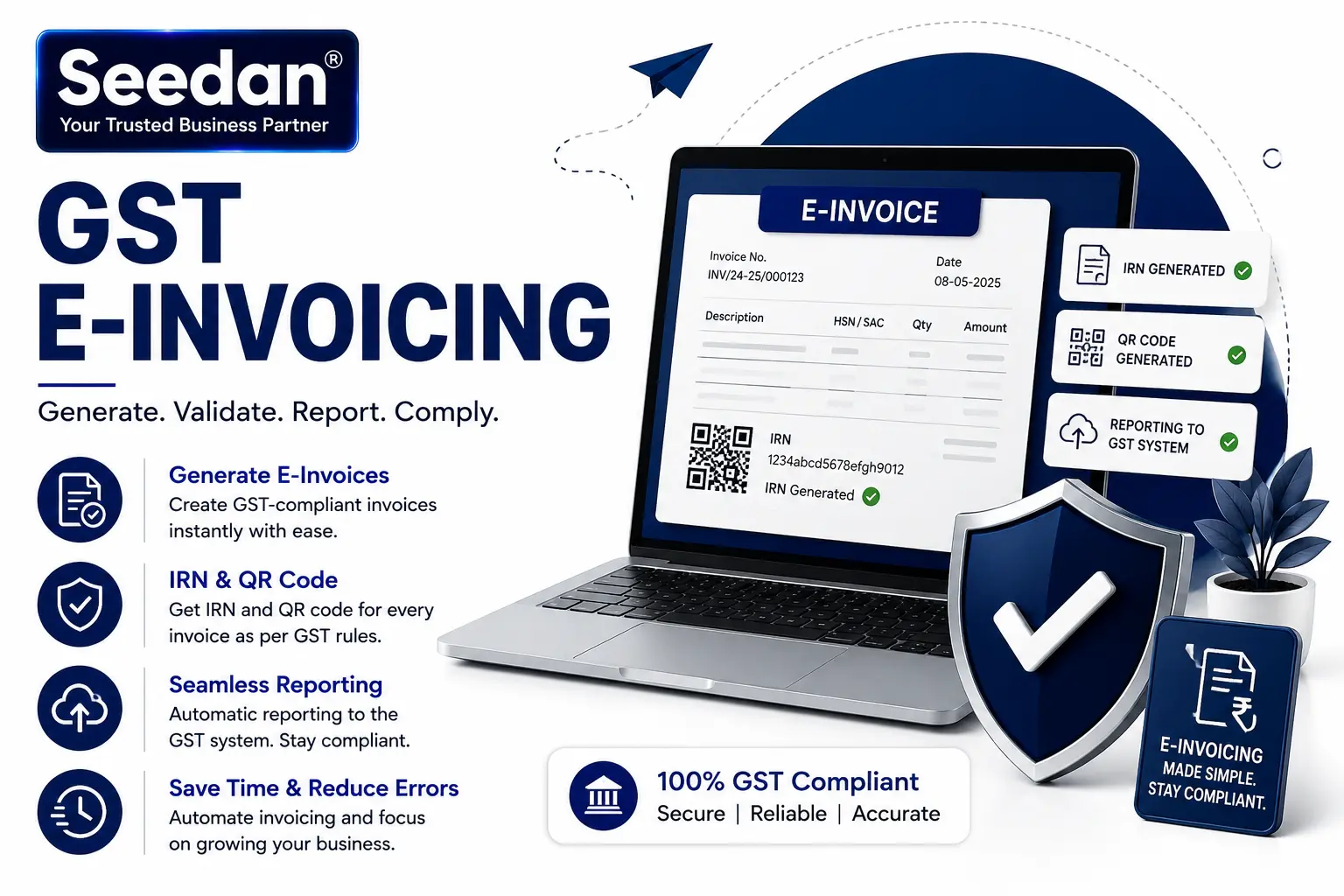
What Is GST E-Invoicing Software?
E-invoicing requires eligible businesses to report B2B invoices to the government's Invoice Registration Portal (IRP) in real time, which validates the invoice and returns a unique IRN (Invoice Reference Number) and a QR code — only invoices carrying a valid IRN are considered compliant. This differs from simply generating a GST-compliant invoice format; it requires actual API-based reporting to the IRP.
E-invoicing software automates this process — generating the invoice, formatting it per the mandated schema, transmitting it to the IRP, and embedding the returned IRN/QR code back onto the invoice — eliminating manual JSON upload and reducing the risk of rejected or delayed invoices that can disrupt cash flow and input tax credit for buyers.
What E-Invoicing Software Should Handle
Step-by-Step Process to Set Up E-Invoicing
- 1Confirm applicability — check current turnover threshold notified by the government for mandatory e-invoicing.
- 2Choose e-invoicing software — standalone tools, ERP-integrated modules, or accounting software with built-in e-invoicing.
- 3Register on the e-invoice/IRP system and generate API credentials.
- 4Integrate the software with your billing/accounting system, if not already unified.
- 5Test invoice generation and IRP transmission with sample invoices before going live.
- 6Go live — all eligible B2B invoices are now generated with real-time IRN and QR code.
- 7Monitor for rejected invoices or errors, correcting and resubmitting as needed.
E-Invoicing Software vs Related GST Compliance Tools
Frequently Asked Questions
No, e-invoicing is mandatory only for businesses above a turnover threshold notified by the government, which has been progressively lowered over time to cover a larger segment of GST-registered businesses — it's important to confirm the current applicable threshold.
An invoice without a valid IRN, when e-invoicing is mandatory, is treated as invalid for GST purposes — this can affect the buyer's ability to claim input tax credit and may attract penalties for the supplier.
Many popular accounting and ERP software solutions now offer built-in e-invoicing integration with the IRP, though it's worth confirming your specific software supports current schema requirements and API connectivity before relying on it.
No, e-invoicing and GSTR-1 filing are related but separate — validated e-invoice data can auto-populate parts of GSTR-1, reducing manual entry, but GSTR-1 filing itself is still a distinct required step.
The QR code embedded on an e-invoice contains key invoice details and the IRN, allowing quick verification of the invoice's authenticity, and is a mandatory component of a valid e-invoice. ---
Ready to set up GST E-Invoicing?
Software setup & IRP integration in one package.
⭐ 4.9/5 rated • CA/CS Assisted
Reviewed by our compliance team
CA/CS Panel, Seedan Group
This guide is reviewed by practicing Chartered Accountants and Company Secretaries at Seedan Group with hands-on experience in Indian business registration and compliance. Content is for general guidance and updated as regulations change.
Related Services
Other services our clients often pair with this one.
GST Amendment
GST Amendment is the process of updating details on an existing GST registration — such as business address, trade name, additional place of business, or part
Learn moreGST Invoicing Software
GST Invoicing & Filing Software is a business tool that combines GST-compliant invoice generation with automated return preparation and filing (GSTR-1, GSTR-3
Learn moreGST LUT Form
A GST LUT (Letter of Undertaking) is a declaration filed via Form GST RFD-11, allowing exporters to supply goods or services without paying IGST upfront, inst
Learn moreGST Notice
A GST Notice is a formal communication issued by the GST Department when discrepancies, mismatches, non-filing, or other compliance issues are identified in a
Learn more