
Design Registration in India
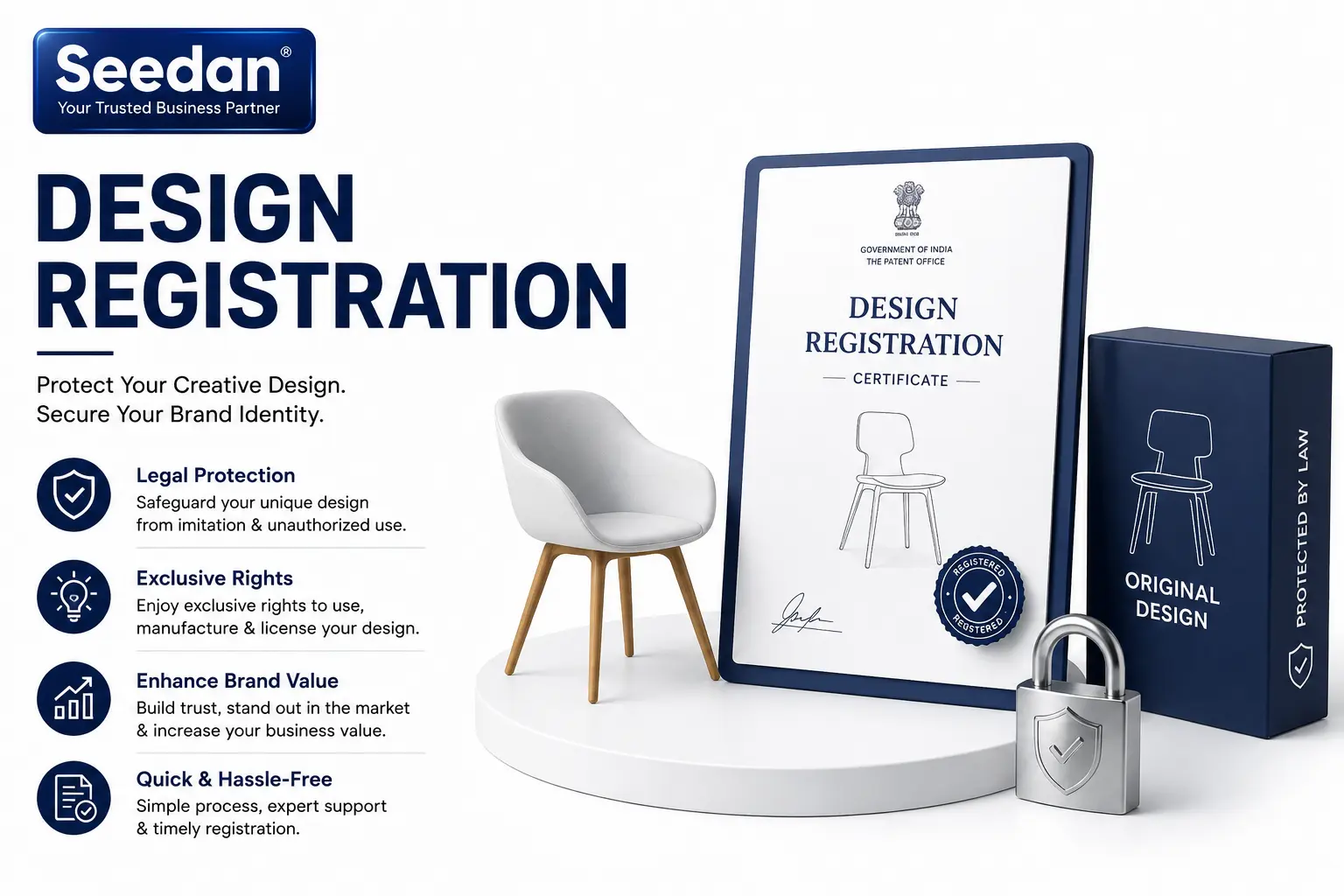
Design Registration protects the visual appearance of a product — its shape, configuration, pattern, or ornamentation — under the Designs Act, 2000, giving the owner exclusive rights to prevent others from copying that specific look for 10 years, renewable once for 5 more years (15 years total). It only protects aesthetic/visual features, not functional or technical aspects, which fall under patent law instead. Filed with the Patent Office (which also administers designs) via Form 1.
What Is Design Registration?
Design Registration protects the aesthetic and visual features of an article — its shape, pattern, ornamentation, or configuration as applied to a finished product — as distinct from the underlying function or technical mechanism, which would instead need patent protection. Common examples include the distinctive shape of a bottle, the pattern on fabric, or the visual form of furniture or consumer electronics.
To qualify, a design must be new or original, not previously published or used anywhere, and must be applied to an article through an industrial process. Purely functional features with no aesthetic element, and designs that are contrary to public order or morality, cannot be registered.
Documents & Eligibility Required
Step-by-Step Process
- 1Confirm the design is new/original and hasn't been previously published or disclosed publicly.
- 2Prepare representations — clear drawings or photographs showing the design from required views (front, side, top, perspective, etc.).
- 3Identify the applicable Locarno Classification class for the article.
- 4File Form 1 with the representations, statement of novelty, and applicant details at the Patent Office.
- 5Application examined — objections, if any, are raised regarding novelty or classification.
- 6Respond to any examination objections, if raised.
- 7Receive the Design Registration Certificate, valid for 10 years, renewable once for a further 5 years.
Design Registration vs Related IP Protections
Frequently Asked Questions
Design Registration protects how a product looks — its shape, pattern, or ornamentation — while a Patent protects how a product works or the technical process behind it; many products benefit from both if they have a novel technical mechanism and a distinctive visual appearance.
No, or at least not safely — a design must be new and not previously published or disclosed publicly anywhere before filing, so publishing or selling a product before filing can jeopardize the design's registrability. It's best to file before public disclosure.
A registered design is protected for an initial period of 10 years, which can be renewed once for a further 5 years, giving a maximum total protection period of 15 years.
Generally, elements that primarily function as a trademark (brand identifiers) are not eligible for design registration, since design protection is meant for the aesthetic form of an article rather than brand-identifying marks — though the visual packaging or product shape itself could potentially qualify for design protection separately.
Designs that are not new or original, are purely functional with no aesthetic element, are contrary to public order or morality, or have already been disclosed/published prior to filing cannot be registered under the Designs Act, 2000. ---
Ready to register your Product Design?
Representation preparation, classification & filing in one package.
⭐ 4.9/5 rated • CA/CS Assisted
Reviewed by our compliance team
CA/CS Panel, Seedan Group
This guide is reviewed by practicing Chartered Accountants and Company Secretaries at Seedan Group with hands-on experience in Indian business registration and compliance. Content is for general guidance and updated as regulations change.
Related Services
Other services our clients often pair with this one.
Copyright Registration
Copyright Registration is the process of officially recording ownership of an original literary, artistic, musical, dramatic, or software work under the Copyr
Learn morePatent Registration
Patent Registration grants an inventor exclusive rights over a new, useful, and non-obvious invention for 20 years, under the Patents Act, 1970, preventing ot
Learn moreTrademark Certificate
A Trademark Certificate is the official document issued by the Trade Marks Registry confirming that a mark has been successfully registered, granting the owne
Learn moreTrademark Hearing
A Trademark Hearing is a scheduled session before the Trade Marks Registrar where the applicant (and, in opposition matters, the opposing party) presents oral
Learn more